🛡️ Discreet & Fast Shipping — Your Privacy & Safety, Guaranteed
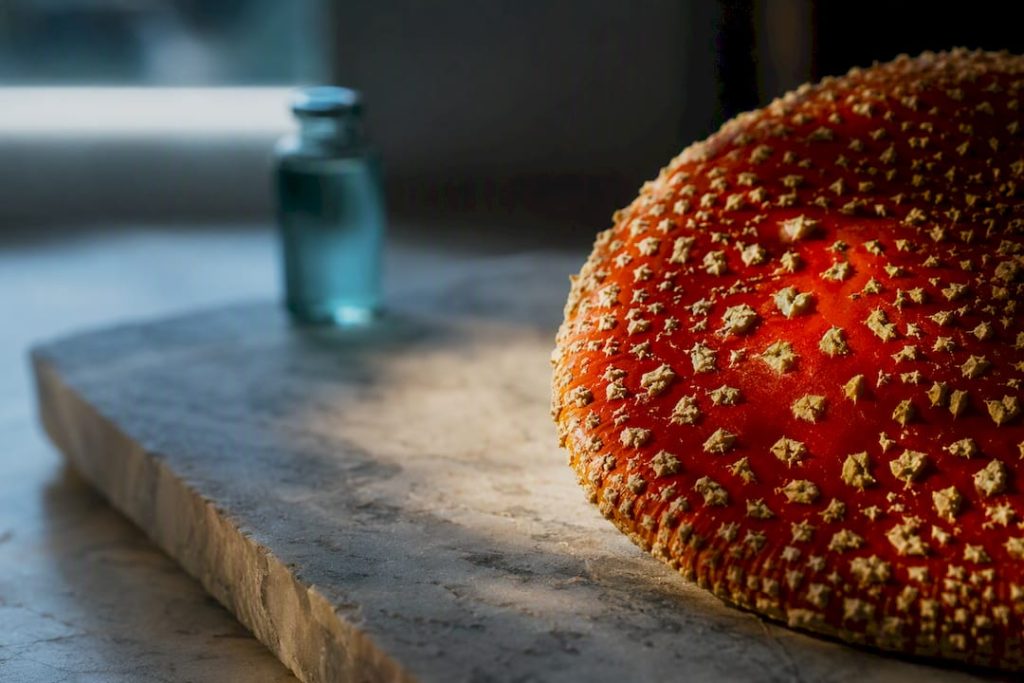
Amanita muscaria microdosing has attracted attention because of anecdotal reports involving relaxation, sleep, and mood. However, there are currently no clinically established dosing guidelines or FDA-approved therapeutic uses for Amanita muscaria.
The mushroom contains muscimol and ibotenic acid, compounds that affect the nervous system in different ways. Their concentrations can vary considerably depending on the mushroom, preparation, and processing method. That variability makes safety and accurate labeling important considerations for anyone researching Amanita products.
Quick summary
- Amanita muscaria does not have a clinically established microdosing protocol.
- Potency can vary substantially between mushrooms and preparations.
- FDA warnings highlight safety concerns surrounding Amanita-containing food products.
- A third-party certificate of analysis (COA) can help verify what a product contains.
- Reported effects tend to involve relaxation and sedation rather than the effects commonly associated with psilocybin.
- Long-term safety data on repeated microdosing is limited.
- Certain medications and medical conditions may increase the risks.
What Is Amanita Muscaria?
Amanita muscaria is the distinctive red-and-white mushroom commonly associated with fairy tales and folklore. Its most important active compounds are muscimol and ibotenic acid.
Muscimol primarily affects GABA-A receptors in the brain and is associated with sedative and psychoactive effects.
Ibotenic acid interacts with glutamate receptors and can contribute to unwanted neurological effects, particularly at higher exposures.
During processing, some ibotenic acid can be converted into muscimol. The extent of this conversion depends on factors such as drying conditions, temperature, and preparation. As a result, two products made from Amanita mushrooms may not have the same chemical profile.
This is one of the major differences between Amanita and more familiar psychedelic mushrooms such as psilocybin-containing species.
Is Amanita Muscaria Safe?
Amanita muscaria should not be considered risk-free.
The U.S. Food and Drug Administration has issued warnings concerning the use of Amanita muscaria and its constituents in food. Reports of illness associated with Amanita-containing products have also highlighted concerns about inaccurate labeling, contamination, and unpredictable potency.
Potential effects of Amanita poisoning can include:
- Nausea and vomiting
- Dizziness
- Drowsiness
- Confusion
- Agitation
- Muscle twitching
- Loss of coordination
- Hallucinations
- Seizure-like activity
Severe confusion, seizures, breathing difficulties, loss of consciousness, or other serious symptoms require immediate medical attention.
The risk can be particularly difficult to assess when a product does not clearly identify its ingredients or active compounds.
Why Product Testing Matters
One of the biggest concerns with Amanita products is uncertainty about what is actually in them.
A certificate of analysis (COA) is a laboratory report that can provide information about the contents of a particular product or batch.
When available, a useful COA may include:
- Muscimol concentration
- Ibotenic acid concentration
- Heavy-metal testing
- Microbial testing
- The batch or lot number tested
- The date of testing
- The laboratory responsible for the analysis
A COA does not automatically make a product safe. It simply provides more information about its composition.
Be cautious with products that make vague potency claims, provide no independent testing, or fail to identify the amount of active compounds.
Is There a Standard Amanita Microdose?
No clinically validated standard dose has been established for Amanita muscaria microdosing.
Online sources and anecdotal reports sometimes describe specific quantities or schedules, but these figures should not be treated as medical recommendations. Natural potency can vary between individual mushrooms, and processing can change the relative amounts of muscimol and ibotenic acid.
This means that a measurement based only on the weight of dried mushroom does not necessarily tell you how much active compound is present.
For the same reason, a number reported by one user cannot reliably predict how another person will respond.
Anyone considering Amanita should discuss the risks with a qualified healthcare professional rather than relying on an online dosing chart.
What Do People Report Feeling?
Reported experiences vary, but anecdotal accounts often describe effects that are more calming or sedating than stimulating.
Some people report:
- Feeling more relaxed
- Reduced daytime tension
- Easier sleep
- Fewer nighttime awakenings
- A quieter or less active mind
Other people report little noticeable effect, while some experience unwanted effects such as grogginess, dizziness, nausea, or impaired coordination.
These reports should be interpreted carefully. Most available evidence comes from personal accounts and limited observational research rather than controlled clinical trials.
That distinction is important: a frequently reported effect is not the same as a scientifically demonstrated benefit.
Is There Scientific Evidence for Therapeutic Benefits?
Research into Amanita muscaria and muscimol is still developing.
Laboratory and preclinical research has provided information about how muscimol interacts with GABA-A receptors. However, this does not establish that consuming Amanita muscaria will safely or effectively treat anxiety, insomnia, pain, depression, or other medical conditions.
Human evidence remains limited compared with the amount of attention the subject receives online.
Claims about therapeutic benefits should therefore be viewed as preliminary unless supported by well-controlled human research.
Amanita vs. Psilocybin Microdosing
Amanita and psilocybin mushrooms are sometimes grouped together because both can produce psychoactive effects, but their active compounds work differently.
Amanita muscaria contains muscimol, which primarily acts through GABA-A receptors and is associated with calming and sedative effects.
Psilocybin is converted into psilocin and primarily affects serotonin 2A receptors.
Because their pharmacology differs, their effects and risks should not be assumed to be interchangeable.
Amanita also has the additional concern of ibotenic acid and the variability created by processing. Comparing the two solely by their ability to produce psychoactive effects can therefore be misleading.
Who Should Avoid Amanita?
Certain people may face additional risks and should speak with a healthcare professional before considering Amanita—or avoid it altogether.
Particular caution is warranted for people who:
- Are pregnant or breastfeeding
- Have a seizure disorder
- Have significant liver or kidney problems
- Take medications that cause significant sedation
- Take benzodiazepines or other GABA-active medications
- Use opioid medications
- Regularly consume alcohol
- Take sleep medications or muscle relaxants
Combining substances that depress the central nervous system can increase sedation and, in some circumstances, create serious health risks.
Never stop a prescribed medication simply to take Amanita. If you take medication regularly, discuss potential interactions with the clinician who manages your treatment.
What Are the Long-Term Risks?
Long-term controlled studies of repeated Amanita microdosing are lacking.
That means important questions remain unanswered, including whether repeated exposure can lead to tolerance, dependence, withdrawal symptoms, or other long-term health effects.
Some self-reported accounts describe tolerance or withdrawal-like symptoms, but these reports cannot establish how common or clinically significant these effects are.
Repeated exposure also raises concerns about cumulative contaminants if a product has not been properly tested.
Until better research becomes available, the long-term safety of regular Amanita microdosing should be considered uncertain rather than assumed to be harmless.
Why Can Experiences Differ So Much?
Several factors can influence how a person responds to Amanita.
Mushroom Composition
Different mushrooms can contain different amounts of muscimol and ibotenic acid.
Processing
Drying and other preparation methods can influence the conversion of ibotenic acid into muscimol. Processing that is inconsistent can therefore contribute to differences between products.
Product Quality
Products with inaccurate labels or inadequate testing make it difficult to know what someone is actually consuming.
Individual Differences
People can respond differently to the same substance because of factors such as metabolism, body chemistry, medications, health conditions, and individual sensitivity.
This variability is one reason there is no reliable universal experience or standardized microdosing protocol.
The Honest Take on Amanita Microdosing
Interest in Amanita microdosing has grown faster than the scientific evidence.
There are plausible biological mechanisms that researchers can study, and many people report subjective benefits. However, the available evidence is not strong enough to establish Amanita microdosing as a proven treatment for sleep, anxiety, mood, pain, or cognitive performance.
At the same time, documented adverse reactions and regulatory warnings show that the risks should not be dismissed.
The most responsible approach is to treat Amanita as a substance with uncertain benefits and genuine risks, rather than assuming that a product is safe simply because it is marketed as natural or sold as a wellness product.
What to Look for When Evaluating an Amanita Product
If you are researching an Amanita product, transparency should be a major consideration.
Look for:
- Independent laboratory testing
- A COA that corresponds to the product or batch
- Clearly identified active compounds
- Testing for contaminants
- Clear ingredient information
- No exaggerated medical claims
A product’s packaging or marketing claims are not a substitute for independent testing.
If a seller cannot provide meaningful information about what is in the product, there is no reliable way for a consumer to assess its potency or contamination risk.
When to Seek Medical Help
Seek urgent medical attention after Amanita exposure if someone develops:
- Seizures
- Loss of consciousness
- Severe confusion
- Serious breathing problems
- Significant loss of coordination
- Severe or persistent vomiting
- Dangerous or rapidly worsening symptoms
If the substance consumed is unknown or may contain additional ingredients, tell medical professionals exactly what was taken if that information is available.
Do not attempt to manage severe poisoning symptoms at home.
FAQ
Is Amanita muscaria safe to consume?
Amanita muscaria is not risk-free and does not have an FDA-approved therapeutic use. Products can vary in composition, and serious reactions have been reported.
Is there a standard Amanita microdose?
No clinically established standard dose exists. Numbers found online generally come from anecdotal or observational sources rather than controlled clinical trials.
What does an Amanita microdose feel like?
Reported effects commonly include relaxation, sedation, sleepiness, or reduced tension. Experiences vary considerably, and some people report unwanted effects or no noticeable effects.
What is a COA?
A certificate of analysis is a laboratory report showing information about the composition and testing of a particular product or batch. It may include active compounds and contaminant testing.
Is Amanita the same as psilocybin?
No. Amanita muscaria and psilocybin mushrooms contain different active compounds that act primarily on different receptor systems.
Can Amanita interact with medications?
Yes. Amanita may interact with substances that cause sedation, including alcohol, benzodiazepines, opioids, sleep medications, and some other central nervous system depressants. Anyone taking medication should consult a healthcare professional before using Amanita.
Are the long-term effects of Amanita microdosing known?
No. Long-term controlled research is limited, so the risks associated with repeated microdosing remain uncertain.
What should I do if someone becomes seriously ill after taking Amanita?
Contact emergency medical services or a poison-control service immediately. Serious symptoms such as seizures, unconsciousness, severe confusion, or breathing problems should not be managed by waiting for the effects to wear off.